What is brand Identity design? Brand Identity Design Process


What is a brand?
Brand creation is not by design; instead, they build in result of people’s experience, trust, beliefs, emotions, and behavior. A brand’s own persistent quality, performance, and high ethical values build a positive image in people’s minds.
What is brand Identity design?
These elements, such as color, typography, logo, icons, and photos, collectively establish a brand’s overall perception. Creating brand identity is a deliberate effort to present a product or service as the designer or brand’s owner intends.
Why is Brand Identity Design Important?
Maintain Brand Consistency
A pre-defined uniform design is essential to achieve consistency across all media platforms over a long period of time. Brands’ consistency results in strong recognition and acceptance among their customers.
To Achieve Brand Uniqueness
In a highly competitive market, only unique brands can stand out and get better attention. A well-designed brand identity, created after a detailed competitor analysis, defines distinct standards and values and presents a brand different from its competitors.
Build Perception.
Brand identity design is an important factor in creating an overall perception of a product or service, which ensures its future success. Generally, people trust according to their perceptions
Association
Another purpose of creating a brand identity design is to create association with an event or entity, which has an emotional value for people.
Visual Elements of Brand Identity Design
To create a strong brand identity design, a designer carefully chooses and defines various visual elements. These elements work like building blocks, and a designer decides and arranges them according to design objectives.

Let’s look at these visual elements one by one in a bit more detail:
Color Palette
Colors are used as a medium for expressing emotions, feelings, and association. A designer decides and arranges a complete color palette that represents a brand overall, values, relevance, theme, and intentions. This color selection and arrangement for the palette is not random; instead, each color is selected and prioritized according to its representation and relevance.
Typography
Typography is another important element of brand identity design. In any design, the text content is the clearest and most direct way to convey a message. Due to its importance and extensive use, a brand identity design is considered incomplete without detailed typography selection.
Logo Design
Because logo design is a comprehensive and complete subject on its own, it is often mistakenly confused with a complete brand identity, while it’s another visual element used to design brand identity. Generally, a logo design is created with a combination of other visual elements such as colors, typography, and icons; it has a clear representation of other important brand elements.
Iconography
Due to the increasing use of digital media, icons and symbols are now becoming more important, especially for websites and UX design. As a result, icon design is often included as part of the brand identity system to maintain better visual consistency across digital platforms.
Images and Photos
As images and photographs often get more attention, most companies use images as a visual element in brand identity design.
Brand Identity Design Process
Before a brand identity is presented to the audience, the process starts with analyzing the brand itself. This requires finding the answers to important questions, such as: What type of brand is it? What are its core objectives? What values does it follow? How does it want to position itself in the competitive market?
Once a clear and well-defined vision and strategy are in place, a strong brand identity design can be developed that effectively communicates the brand’s personality and purpose.
The next important step is conducting detailed research about market trends, user behaviour, and competitor analysis. This data and information assist in better brand positioning and setting strong brand values.
Brands’ Name and Tagline
A relevant, easy-to-remember brand name and a clear and goal-oriented brand tagline provide a solid foundation to initiate the brand identity design process.
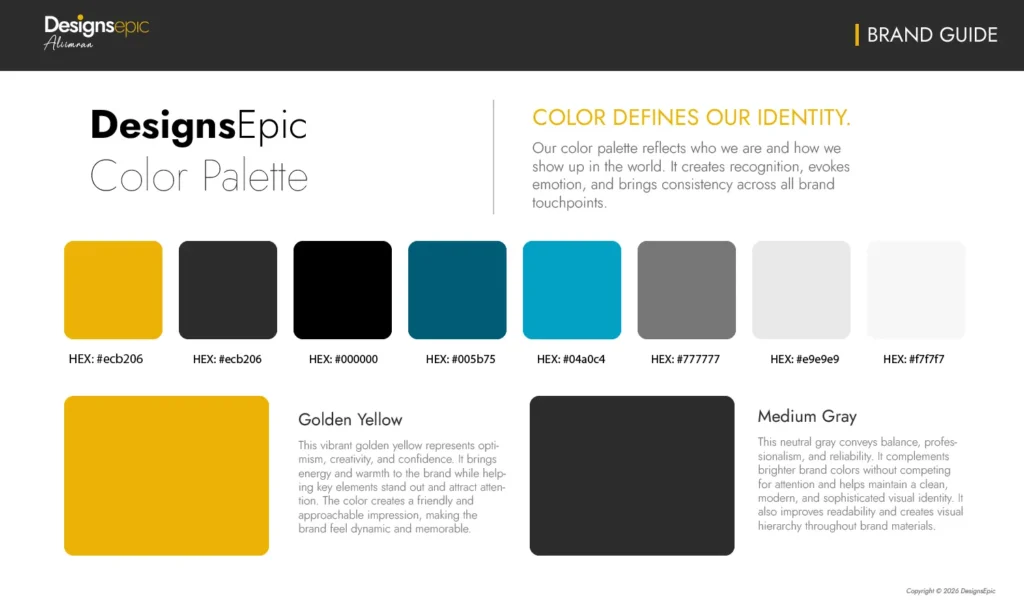
Arrange Color Palette
Usually, color selection is the preferred starting point of a brand identity process. It is a thoughtful process and requires a deep understanding of color theory, the emotional significance of various colors, association with a particular event or entity, and cultural and social interpretation.
Designers arrange a complete color palette considering the brand-specific objective. They also make sure of harmony among different colors and flexibility across different platforms and media types.
There are many online color palette generators making color selection fast and accurate. Some of the popular color palette generators are:
As a good practice, colors should be arranged and prioritized according to their use and importance.
Example of Brand Guide Color
Text and Typography
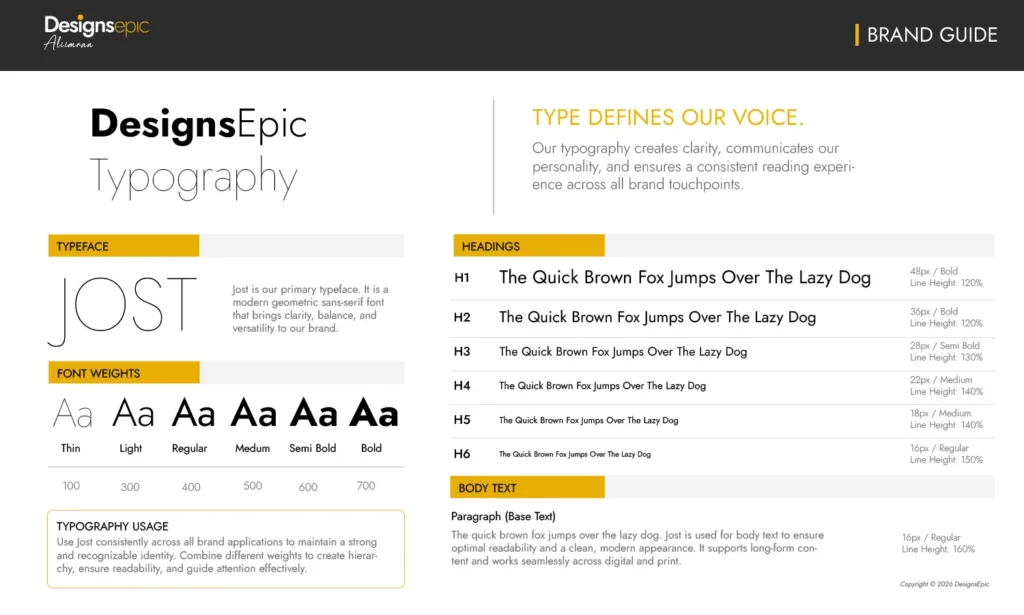
Choosing the right typeface for a design's text content makes the message clearer by setting its tone, focus, and manner.
When it comes to selecting a correct font or writing, there are hundreds of options available; some are more casual and routine, while others give a more serious and corporate feel. So a typeface selection should be in accordance with brand type, industry, message, and the overall perception it wants to establish.
To achieve more uniform typography across all media forms, it is important to define every detail of it, including font style, size, weight, case, etc.
Example of Brand Guide Typography
Logo Design
A logo alone tells a lot about a brand, which makes logo design a central and most important part of the brand identity system. Depending on the logo type, a Logo design consists of various other branding elements such as color, text, icons, and symbols, which makes it a clear interpreter of a brand identity.
Logo designs are of various types such as: symbol, wordmark, lettermark, combination mark, and emblem. However, regardless of logo type, the main purpose of any logo design is to establish a strong brand image and to make it memorable.
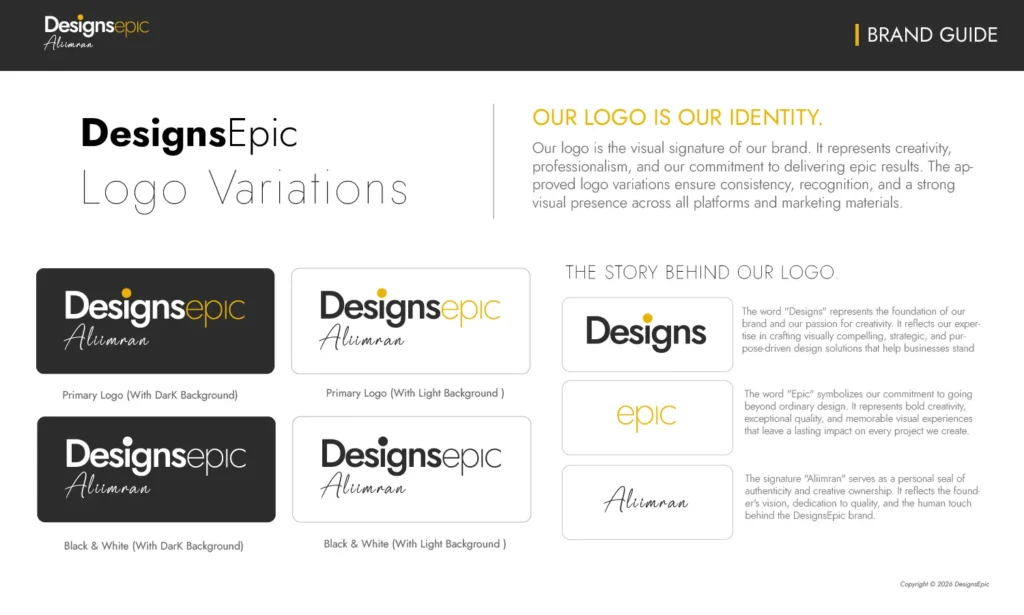
Example of Brand Guide Logo
Images and Photographs
Considering the effectiveness of visual elements in communication, most brands use images and photographs to convey their messages. Due to the increasing use of digital media, images are getting more attention from users, so most brands find it a more effective way to convey their message.
Sometimes, brands find it difficult to express an idea through other visual elements and use real-life images to make it clear and close to reality.
However, images alone are not sufficient to establish a complete brand identity. They work in collaboration with other visual identity elements such as logos, typography, color palettes, and graphic styles to create a consistent and recognizable brand system.
Branding Terms a Brand Identity Designer Should Know
Brand Values
Brand values are the primary standards and beliefs a company is committed to follow for the betterment of its clients, other stakeholders, and community. These beliefs define and reflect a company's character and personality.
Brand Awareness
Brand awareness is how easily a brand’s customers recognize it. Companies use various advertising methods and media to achieve strong brand awareness. The ultimate goal is to introduce a product or service to a large number of people.
Brand Positioning
A company's strategy to build a particular image and reputation of a brand in its customers' minds. Brand positioning is often referred to as a brand comparison with its competitors. Companies adopt different strategies to introduce their product as a quality product and a comparatively better choice.
Brand Strategy
Brand strategy is a long-term, detailed plan to achieve multiple business and branding objectives. It’s a broader term that covers brand promotion, identity design, target audience, marketing, and communication to ensure better brand presence.
Brand Image
Brand image refers to a customer’s perception of a brand based on their experience and observation.
Brand Loyalty
A customer's repetitive selection and use of a product or service refers his brand loyalty towards a specific brand. Brand loyalty usually develops over time with frequent use and positive experience. It reflects consumers' trust and belief in a particular product or service.
Brand Consistency
Brand consistency is a uniform presentation of a brand identity, message, and values across all media platforms. It’s a more professional approach and helps to win customer trust and confidence.
Personal Branding
Usually refers to promoting and creating an identity of an individual professional. The purpose of personal branding is to highlight an individual's service, skills, and expertise. Here, an individual professional is introduced and presented as a brand rather than a person.
Rebranding
Rebranding is presenting an existing brand with a completely new identity, message, values, and positioning. It is not always in response to an existing brand failure. Sometimes, there is a considerable improvement in a brand's features and quality due to the adoption of new technologies; companies prefer to present them with a new identity to attract more customers.
Brand Guidelines
Brand guidelines is a document providing details of all rules and standards set by the company to establish a uniform brand identity.
Frequently Asked Questions (FAQ)
Summary
Brand identity design is a strategic process for creating recognition for a company, product, service, or individual through visual elements. These elements, such as color, typography, logo, icons, and photos, collectively establish a brand's overall perception.
Brand identity design helps to maintain brand consistency, build brand reputation, and a brands positive perception. A well-designed brand identity, created after a detailed competitor analysis, defines distinct standards and values and presents a brand different from its competitors.
The brand identity design process starts with finding answers to important questions, such as: What type of brand is it? What are its core objectives? What values does it follow? How does it want to position itself in the competitive market?
The next step is conducting detailed research about market trends, user behaviour, and competitor analysis. This data and information assist in better brand positioning and setting strong brand values.